High Imagination + Low Self-Discipline: What This Personality Combination Means
June 6, 2026
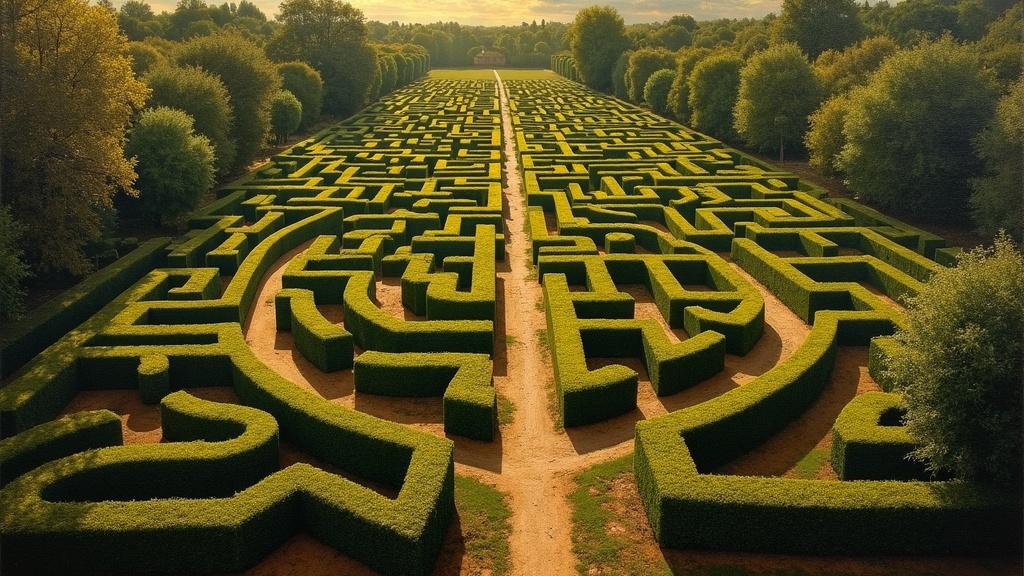
High Imagination + Low Self-Discipline: The Brilliant Starter Who Rarely Finishes
You have started more projects than most people have imagined. Notebooks full of first chapters. Hard drives full of prototypes. Conversations full of "I had this great idea" stories that your friends have learned to enjoy without expecting a follow-up.
This is the signature pattern of high Imagination (Openness facet O1) combined with low Self-Discipline (Conscientiousness facet C5). It is one of the most common sources of creative frustration, and it is built directly into the personality structure.
The Facets Explained
Imagination captures the active, generative quality of your inner mental life. High scorers think in vivid hypotheticals, naturally generate novel scenarios, and find their minds producing ideas without deliberate effort. This is the facet most closely tied to the raw material of creativity: the capacity to envision things that do not yet exist (DeYoung et al., 2007).
Self-Discipline measures the ability to stay on task, resist distractions, and persist through boring or difficult stretches of work. It is specifically about following through once you have begun something. Low scorers are not incapable of working hard. They work hard in bursts, driven by interest and novelty. What they struggle with is the sustained, grinding middle phase of any project where the initial excitement has faded but the finish line is still distant (Roberts et al., 2005).
Why This Combination Creates a Specific Problem
The problem is not starting. The problem is the middle.
Every project has an excitement curve. The beginning is full of novelty: new ideas, new possibilities, the thrill of an unexplored direction. The end has its own energy: the satisfaction of completion, the desire to cross the finish line. But the middle is a long, flat stretch of execution where the work is known, the direction is set, and the remaining effort is largely repetitive.
High Imagination makes the beginning phase intensely rewarding. Low Self-Discipline makes the middle phase nearly intolerable. And critically, high Imagination is constantly generating new beginnings, new ideas that offer the same initial rush. So the pattern becomes: start, get excited, hit the middle, notice a new idea, start the new thing, repeat.
Duckworth et al. (2007) studied what they called "grit," the combination of passion and perseverance for long-term goals. Their research found that grit predicted success above and beyond talent. People with the facet combination described here are essentially the opposite of gritty. They have abundant passion (for new things) and minimal perseverance (for existing things).
The Behavioral Pattern
If you score high on Imagination and low on Self-Discipline, you are probably the person who:
- Has a graveyard of abandoned projects that were genuinely good ideas, each abandoned at roughly the same percentage of completion (usually 15-30%)
- Finds the most productive version of yourself shows up in the first week of any new project, then steadily declines
- Uses "research" as a procrastination tool, because learning about a new angle on your project feels productive while actually doing the next step feels tedious
- Experiences a specific kind of guilt that comes from knowing you are capable of finishing things but watching yourself not do it, over and over
- Works best under extreme time pressure, because a deadline compresses the entire excitement curve into a short enough window that your interest survives to the end
- Has tried every productivity system, app, and method available, experienced a brief improvement each time, then abandoned the system itself because it became boring
That last point is particularly telling. Productivity systems are, themselves, new projects. They offer the same novelty rush. And they suffer the same fate.
What the Research Says
Openness and Conscientiousness are the two Big Five domains most relevant to creative production. Openness provides the ideas. Conscientiousness provides the execution. When these domains diverge at the facet level, with Imagination high and Self-Discipline low, you get maximum creative input and minimum productive output.
Feist (1998) conducted a meta-analysis of personality and creativity and found that creative people across arts and sciences scored high on Openness but showed variable Conscientiousness. The most successfully creative people tended to have at least moderate Self-Discipline, enough to finish things, even if they were not particularly orderly or dutiful in other ways.
This suggests that Self-Discipline, more than any other Conscientiousness facet, is the bottleneck for converting creative potential into creative achievement. You can be disorganized, rebellious, and unconcerned with rules, but if you can sit with a project through the boring middle, you will produce work that more disciplined but less imaginative people cannot.
The Distraction Economy
Modern technology has made this combination significantly more difficult to live with. In 1950, a person with high Imagination and low Self-Discipline had a limited number of new stimuli available at any moment. A bookshelf. A radio. A conversation.
In 2026, the same personality has infinite novelty available at all times. Every phone notification, every social media scroll, every new article is a micro-beginning, a tiny hit of the novelty that the Imagination facet craves. The environment is perfectly engineered to exploit the specific weakness that low Self-Discipline creates.
This is not an excuse. It is a structural observation. The same personality combination that produced functional, if messy, creative output in previous generations now faces an environment that systematically rewards the weakness and penalizes the strength.
Working With the Pattern
Three strategies consistently help people with this combination:
Shrink the middle. Break projects into pieces small enough that each piece has its own beginning and end. If your interest survives for about a week, make each sub-project completable in a week.
Use external accountability. Low Self-Discipline means low internal task persistence. External pressure from collaborators, deadlines, or public commitments fills the gap that internal discipline does not.
Protect the mornings. If there is a window in your day when Self-Discipline is highest (for most people, early in the day), use that window for the middle-phase work. Save the fun, novelty-driven work for later, when your discipline is already depleted.
The goal is not to become disciplined. It is to structure your life so that discipline matters less.
Curious where you actually fall on these dimensions? Take the free Big Five personality quiz and find out which of the 30 facets define your specific personality pattern.