Gift Ideas for the Person Who Wants to Know Themselves Better
July 20, 2026
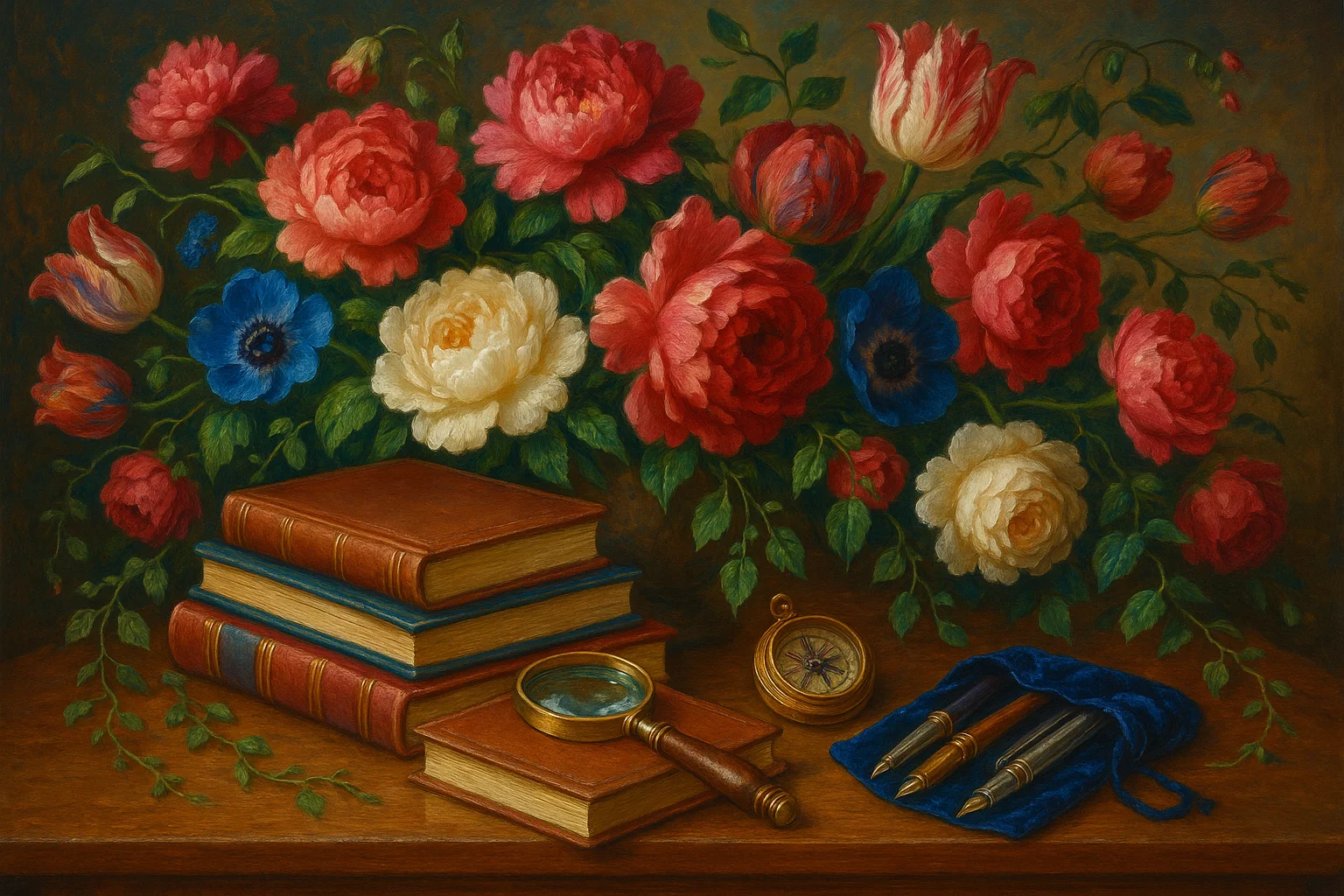
Everyone has a person like this in their life. They underline passages in books. They've taken the same personality test three times just to see if their answers have shifted. They use phrases like "I've been thinking about this" more than the average person. They ask questions other people don't think to ask.
These are the people who are trying, quietly and seriously, to understand themselves. And they are surprisingly easy to shop for once you know where to look. This is your actual gift guide. No airport paperbacks, no throwaway items, no products that sound deep but aren't. Things that land.
Why This Person Is Easy to Shop For
People who want to know themselves better are hungry for good raw material. They're not looking for inspiration in the generic sense. They're looking for specific, concrete things that give them something to work with. A new framework. A question they hadn't considered. An object that creates a small ritual. An experience that shifts how they see something.
This hunger is wonderful for gift-givers, because it means a thoughtful gift in this direction almost always lands. You don't need to be psychic. You just need to understand what kinds of things actually feed the kind of attention they're trying to practice.
Here are the categories that work.
Books That Do the Heavy Lifting
The introspective person often has too many books, but there is always room for one more that does something the others don't.
For the person who wants a real personality framework: Personality: What Makes You the Way You Are by Daniel Nettle is a short, warm introduction to the Big Five model, which is the most scientifically grounded way to think about personality. It's funny in places, and you can read it in a weekend.
For the person who wants to understand their decisions: Thinking, Fast and Slow by Daniel Kahneman. It's a Nobel Prize winner's tour through how humans actually think, as opposed to how we like to imagine we think. Dense but rewarding. Gift it with a bookmark and zero pressure to finish quickly.
For the person working through emotional patterns: The Body Keeps the Score by Bessel van der Kolk is the go-to book for understanding how experience lives in the body. If the recipient has been thinking about therapy, healing, or why certain things affect them so strongly, this book is a doorway.
For the person who wants a beautiful reflection: The Year of Magical Thinking by Joan Didion is not a self-help book, but it's one of the most clear-eyed examinations of how a mind works through difficulty ever written. Readers often describe it as a mirror. If the recipient likes writing as much as ideas, this is a perfect match.
Books are the default introspective-person gift for a reason. Pair it with a note explaining why you thought of them when you picked it, and the gift doubles in value.
Tools for Reflection
You might think the tools are less important than the content, but tools create small rituals, and rituals are the structure inside which reflection actually happens.
A really nice notebook. Not a cheap one, and not a novelty one. A notebook with good paper, a cover they love, and a size that fits their bag. The point isn't the notebook itself. The point is that the good notebook is more likely to get used, because it invites them to use it. A sad cheap notebook sits on a shelf. A notebook that feels good in the hand ends up being carried around.
Leuchtturm1917 and Midori make notebooks most introspective people love. Hard-cover, numbered pages, dot grid or blank, and a ribbon bookmark. Spend a little extra here.
A fountain pen. This sounds old-fashioned, and that's part of why it works. Writing with a fountain pen feels different from writing with a ballpoint. It slows the hand down, which tends to slow the thoughts down, which is exactly what a reflective person is trying to accomplish. The Lamy Safari is a well-loved entry-level option. The Pilot Metropolitan is another. You don't have to spend much to get something meaningfully nicer than a disposable pen.
An hourglass. This is an unusual pick, but it works for the person who likes small rituals. A five-minute or ten-minute hourglass sitting on a desk becomes a quiet signal. Flip it over, and for as long as the sand runs, you're doing one thing. It's an oddly effective tool for someone trying to make reflection into a habit.
A reading pillow or a good lamp. Boring gifts that become someone's favorite thing. The introspective person often reads in the same corner of the house for hours. A reading pillow that supports their back or a lamp with warm light that doesn't hurt their eyes is the kind of gift that gets used every day for years and quietly improves their life.
Experiences That Reveal Something
The best experience gifts aren't generic. They're specific to something the person is trying to understand or enjoy more.
A solo retreat. A night or two at a quiet cabin, a small countryside hotel, or a monastery that offers lay visitor stays. For the introspective person, the chance to spend a stretch of time alone in a beautiful place without any agenda is one of the most valuable gifts there is. They won't book it for themselves, because it feels indulgent. You booking it makes it permissible.
A guided exploration. A visit to a museum they've been meaning to go to, a garden tour, a historic site they've mentioned, a specific class in something they've been curious about. The gift is that you listened when they mentioned it in passing. The specificity is the whole thing.
A walking meditation class or a pottery workshop or a long cooking lesson. Activities that put the body to work and let the mind quietly rearrange itself. Reflective people often benefit enormously from activities that don't demand they reflect, because reflection sneaks in the side door when the mind is occupied with something simple.
A long conversation, protected. Book a long reservation at a restaurant they love, tell them the whole evening is yours to talk, and don't bring your phone. For some people in your life, this is a better gift than any object you could wrap.
Small Objects with Meaning
The introspective person tends to build up a small collection of meaningful objects on their desk. A good gift often joins this collection.
A small mirror. Not a vanity mirror. A beautiful small hand mirror or a pocket mirror, something elegant enough to sit on a desk or a shelf. For a person interested in self-knowledge, a mirror is a gentle, non-heavy-handed symbol. Doesn't have to be expensive to land.
A brass compass. Old-fashioned, yes, but the kind of object that sits on a desk for decades and collects meaning. A compass is the obvious symbol for direction, and an introspective person who is trying to figure out which way to go appreciates small material reminders.
A set of nice question cards. There are several small decks of cards designed to prompt interesting conversations or reflections. The School of Life makes some good ones. They're not gimmicky if you pick carefully. A deck like this becomes a tool for dinners and car rides and evenings with a spouse.
A beautiful key. If you have access to a locksmith or a craft fair, a beautiful antique or handmade key becomes a surprisingly powerful object. Keys are symbols of opening, and the introspective person is very often working on opening something inside themselves. An object without a lock can still carry meaning.
The Personalized Book
A category of its own. A personalized book is one written specifically about the recipient, not just with their name on the cover. A real one is built on an assessment of who they are and reads like a long letter describing them back to themselves.
This is the part of the gift guide where I tell you we make one at Inkli. It's based on the Big Five personality model, and it reads like a real book, about two hundred pages, written specifically for one person. It's the kind of gift the introspective person in your life is exactly the right audience for, because they will read every page of it and reread parts of it for years.
I don't want to sell it to you here. If it's useful, use it. If not, the rest of this list is still good.
A Subscription That Feeds Them
Reflective people often quietly love a good subscription. The trick is picking one that suits them, not a generic one.
A literary magazine. The Paris Review, Harper's, The Threepenny Review, or Granta are all well-crafted and full of the kind of writing reflective people love to have around. These arrive in the mail a few times a year and become quiet companions.
Fresh flowers delivered. Not because flowers are about self-discovery, but because a lot of introspective people find that having something beautiful and alive around helps them settle. A weekly or biweekly flower delivery is a small luxury that reframes their whole home.
A good audio lecture subscription. Services that deliver long-form lectures on philosophy, psychology, history, and literature are oddly valuable for reflective people. They listen while walking or cooking and then think about what they heard for days.
A Word About What to Avoid
A few things that tend to miss with this kind of person, even though they sound plausible.
Generic gratitude journals. They're usually too vague and too cheerful to be useful. A reflective person has a more complicated relationship with their own feelings than "list three things you're grateful for" can handle.
Vision board kits or manifestation supplies. This person is trying to know themselves, not to decorate their way to a new identity. The hand-waving around these products tends to read as hollow to someone taking the question seriously.
Anything that promises a quick fix. A reflective person often has a low tolerance for gimmicks and a high tolerance for slow, patient work. Gifts that promise dramatic results in seven days feel insulting even when they're well-intentioned.
Another personality quiz you found online. If you want to give a personality-related gift, make it a substantial one. A random quiz link is not a gift.
The Gift Underneath the Gift
Here's the thing about gifts for introspective people. They notice more than most. They notice whether you thought about them as a real person or grabbed something off a shelf. They notice whether the gift fits who they are or who you think they should be.
That attention is a vulnerability for the gift-giver, because you can't fake your way past it. But it's also a gift in itself, because it means when you do pay attention, they notice that too, and they remember. Take a little care. Pick the one that matches them, not the one that matches the holiday. They will feel it, and the gift will outlast the wrapping paper by a very long time.